Why Thermoforming Plastics Is the Future of Custom Manufacturing
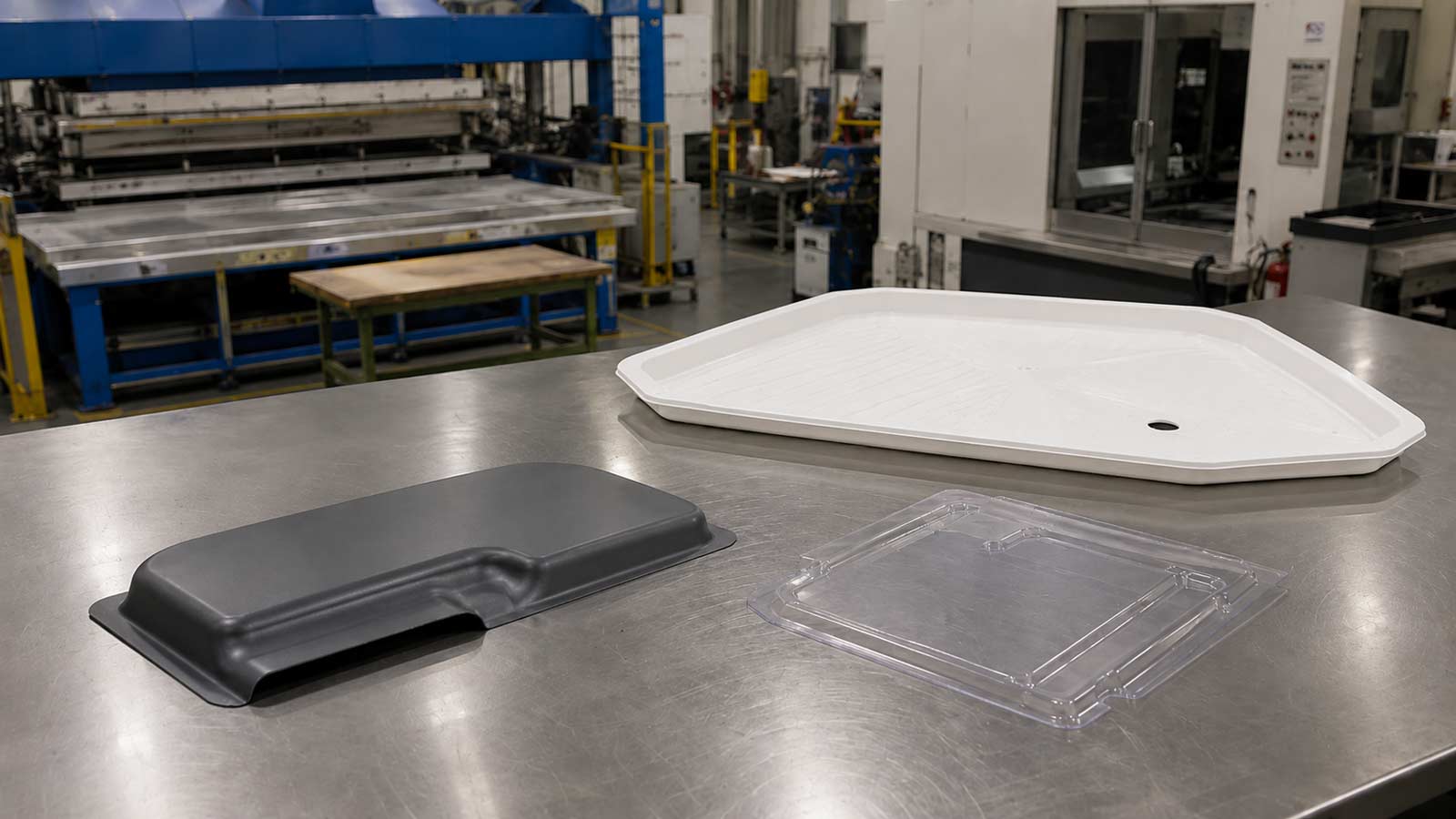
If you are launching a new enclosure, tray, or cover—not committing to a million-part injection program—thermoforming is often the most practical way to get repeatable plastic parts without tying up capital in steel molds for months.
At 4K Custom Thermoforming in Byron Center, Michigan, we’ve watched the plastics industry evolve, and one thing is clear: thermoforming plastics is leading the charge in custom manufacturing. Companies across the Midwest—and yes, even our friends over at Duo-Form Plastic—are proving that this process delivers versatility, durability, and cost-efficiency for industries like RV, automotive, horticulture, and industrial equipment.
What Makes Thermoforming Stand Out?
Thermoforming takes a heated plastic sheet and draws it into a tool with vacuum (and sometimes pressure assist), then trims the part to final size. That sounds simple, but it is how you get complex geometry—RV shower pans, electric-vehicle enclosures, agricultural housings, returnable WIP trays—from tooling that is typically far less expensive than injection molds and faster to modify when the design changes.
Unlike injection molding, thermoforming is often the better fit for low-to-medium runs: you are not amortizing a six-figure mold before the first parts ship. Lead times for production tooling are commonly measured in weeks, not months, which matters when a line startup or product refresh has a fixed date. We have honed this craft to deliver precision parts with schedules that keep your projects on track.
Advancements in CNC trimming, CAD-driven nest design, and modern vacuum-forming equipment have pushed what you can expect from formed sheet. The process supports a wide range of materials—from impact-resistant ABS to clear PET and food-grade options for horticulture—many of which are recyclable, which helps teams meet sustainability targets without giving up performance.
Where Custom Thermoforming Shows Up
Thermoforming is not one product type. It is a process that scales from prototype quantities to steady production programs. Common applications we see from Michigan and regional customers include:
- Interior and exterior panels, liners, and covers for RV and specialty vehicles
- Enclosures, shrouds, and bezels for industrial and EV-related equipment
- Work-in-process trays, dunnage, and protective packaging for assembly and shipping
- Horticulture propagation trays and inserts sized for automated filling and handling
- Point-of-purchase and industrial packaging where nest geometry protects the product in transit
What ties these together is repeatability: the same formed geometry, the same material, the same stack height—week after week. That is where thermoforming earns its place on the floor, not just on a quote spreadsheet.
When Thermoforming Is the Smarter Bet
Thermoforming is not always the answer. Very high annual volumes and extremely tight tolerances on thick structural features may still favor injection molding or machining. But when tooling cost, design flexibility, or time-to-market drives the decision, formed sheet plastic often wins.
For a deeper side-by-side on tooling cost, lead time, and volume breakpoints, see our article on when thermoforming is a better alternative to injection molding. The short version: if you expect design iterations after the first samples, thermoforming usually punishes you less than cutting new mold cavities.
Why Michigan and the Midwest Matter
Manufacturing here runs on short communication paths. When you need sample trays for a line trial, a flange adjustment before launch, or a rush on returnable dunnage, working with a thermoformer in Michigan beats routing everything through a distant catalog house. Freight to Indiana, Ohio, Illinois, and Wisconsin stays reasonable; site visits and line-side feedback are realistic, not theoretical.
4K Custom Thermoforming serves manufacturers throughout Michigan and the broader Midwest while supporting customers nationwide when the program fits. If your need is custom nests for a new assembly line or reshoring project, our guide to thermoformed trays for Michigan manufacturers walks through timing, quantities, and what to plan before startup week.
Competing in a Crowded Market
Let’s give credit where it’s due—Duo-Form Plastics has been at this for over 50 years, and their ISO 9001:2015 certification shows they mean business. In a market with strong regional players, what still differentiates a shop is how quickly you move from concept to formed parts on the bench. Our design tools and rapid prototyping turn ideas into testable geometry faster, whether you are an RV supplier needing lightweight accessories or an EV-related program looking for a new enclosure.
Why Work With 4K?
While Duo-Form’s new design center (launched in 2024) is impressive, we focus on flexibility for mid-volume custom work: close collaboration on flange detail, draft, nest density, and material choice—not every thermoforming shop wants that level of hand-holding. Our Michigan base keeps us grounded and responsive, so you are not just another order number in a national queue.
The Future Is Plastic—and We’re Shaping It
Thermoforming is not a fad; it is how a growing share of custom plastic work gets done when programs need speed, sensible tooling, and parts that hold up in real handling environments. Its ability to produce durable, customizable components at practical volumes is reshaping how industries bring products to market—from West Michigan assembly floors to national OEM supply chains.
At 4K Custom Thermoforming, we are proud to compete in this space and push what custom plastic manufacturing can achieve for customers who need more than an off-the-shelf bin. Ready to see the difference? Share your part, material preferences, and target volume—we will help you decide whether thermoforming is the right fit.